Major Selection Criteria: Net Shape
View
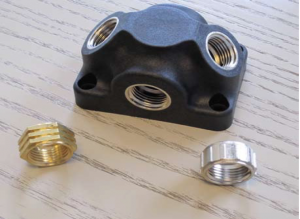
For this part, zinc was an excellent substitute for brass. Key benefits include: No secondary operation: screw thread directly as cast. Redesigned concept: switching from machined part to casting technology. Split core technology.
View
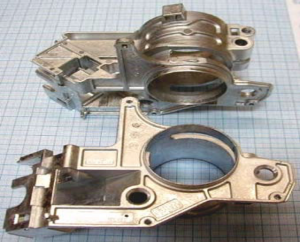
Key benefits include: Design and use of a complex tool to avoid multiple secondary operation. Excellent gating control to achieve mechanical tolerances.
View
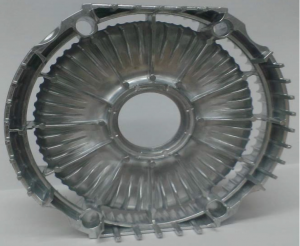
This part is used in a drive system as a special shield to guarantee good air ventilation in addition to perfect cooling of the system. Reasons for choosing zinc alloy include the complex tool design; requirement to cast the part to size; ability to forego using...
View
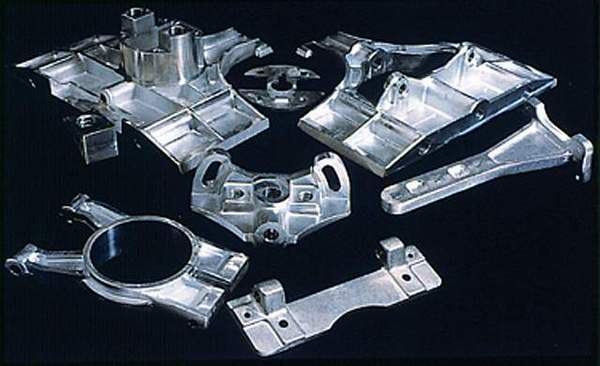
Eight separate ZA-12 alloy castings are utilized in the TUCKER woodworking vise. Castings form the pivot block, front jaw, rear jaw, quick-release nut, yoke, stanchion, mounting plate, and keeper plate. Based on the shapes needed to form the vise, casting easily...
View
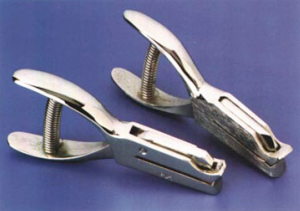
For three generations, B-V has been producing heavy-duty, specialty hand punches from two sand-cast malleable iron halves. Sand casting inaccuracies required sorting and extensive fitting to locate matching halves. Thickness variations up to 0.025 in. were...
Page 7 of 14« First«...56789...»Last »